

What Is The Ps4 Gpu Equivalent To
An in-depth walkthrough of how we built and benchmarked a PS4 Pro-inspired PC.
Now that Sony has officially unveiled the PlayStation 4 Pro and its specs, we have enough information to reasonably build an equivalent gaming PC. This will allow us to guess approximately how fast the console might run, and nosotros'll be doing it "for science"!
While we won't be able to copy the PS4 Pro exactly (we don't accept the chassis, coupled with technical issues that prevent us from doing so--which we'll delve into down beneath), it helps that the PS4 Pro runs on an x86 design. This is the same micro-architecture used in gaming PCs. Speaking of which, our PS4 Pro PC build happens to exist nearly identical to the $700 budget VR rig we recently congenital. It just needed a few tweaks, which we've made for this experiment.
Who Should Upgrade to a PS4 Pro?
Desire us to remember this setting for all your devices?
Sign up or Sign in at present!
Please use a html5 video capable browser to scout videos.
This video has an invalid file format.
Sorry, just you can't access this content!
Walking You Through Our PS4 Pro PC Build
The revealed PS4 Pro specs are as follows:
- Main processor: Custom-fleck unmarried Processor
- CPU: x86-64 AMD "Jaguar," 8 cores
- GPU: 4.two TFLOPS, AMD Radeon based graphics engine
- Memory: GDDR5 8GB
- Storage size: 1TB
- External dimensions: Approx. 295×55×327 mm (width × elevation × length) (excludes largest projection)
- Mass: Approx. 3.3 kg
- BD/DVD Drive: BD × six CAV, DVD × 8 CAV
- Input/Output: Super-Speed USB (USB 3.ane Gen.1) port × 3, AUX port × 1
- Networking: Ethernet (10BASE-T, 100BASE-TX, 1000BASE-T)×1, IEEE 802.11 a/b/g/n/air conditioning, Bluetooth® 4.0 (LE)
- Ability: AC 100V, 50/60Hz
- Power consumption: Max. 310W
- Operating temp: 5ºC – 35ºC
- AV Output: HDMI out port (supports 4K/HDR) DIGITAL OUT (OPTICAL) port
While we don't take the super deep swoop details on all the technical specifications of Sony's upcoming console, we practise know that the PS4 will use an 8-core AMD CPU, and then our equivalent build also uses an 8-cadre AMD CPU. Specifically, our PS4 Pro rig uses an FX-8350 processor.
To analyze, the PS4 Pro will use a system-on-a-bit that integrates the CPU and graphics processing unit together on the aforementioned die. While AMD makes accelerated processing units that combine the ii on one scrap, these consumer APUs are designed more for laptops and workstations--they aren't really meant for high-stop gaming setups, which Sony's pitching the PS4 Pro every bit. Thus, it makes more than sense to go with two separate, more powerful components for our build.
For its GPU, the PS4 Pro is using AMD graphics based on the company'due south Polaris architecture. With that in mind, nosotros went with the Radeon RX 480 as our graphics carte du jour. This is AMD's flagship Polaris GPU and features five.viii teraflops of graphical performance.
I can make the argument that the PS4's GPU more than closely resembles the slightly weaker RX 470, since its 4.9 teraflop count is more than in line with the PS4 Pro's four.ii equivalent. But we call up there's a stronger case for the RX 480--both it and the PS4 Pro use 8GB of GDDR5 VRAM. The 470, on the other mitt, only uses 4GB. It's worth stressing the importance of having the right amount of VRAM here, equally it tin can exist necessary to push high-resolution 4K (2160p resolution) textures. Since Sony'due south advertizing the PS4 Pro as a 4K-capable gaming console, we thought we'd err on the side of a little more power to avoid creating an unrealistic bottleneck that the PS4 Pro isn't probable to meet. Furthermore, while the RX 480 is likely to be a little more powerful than the PS4 Pro's integrated Polaris solution, ane advantage that consoles have is admission to a low-level application programming interface (API) tuned specifically for their established specs. Gaming PCs generally use Microsoft DirectX, which is an API amend suited for PCs that allows games to scale across a broad array of reckoner configurations.
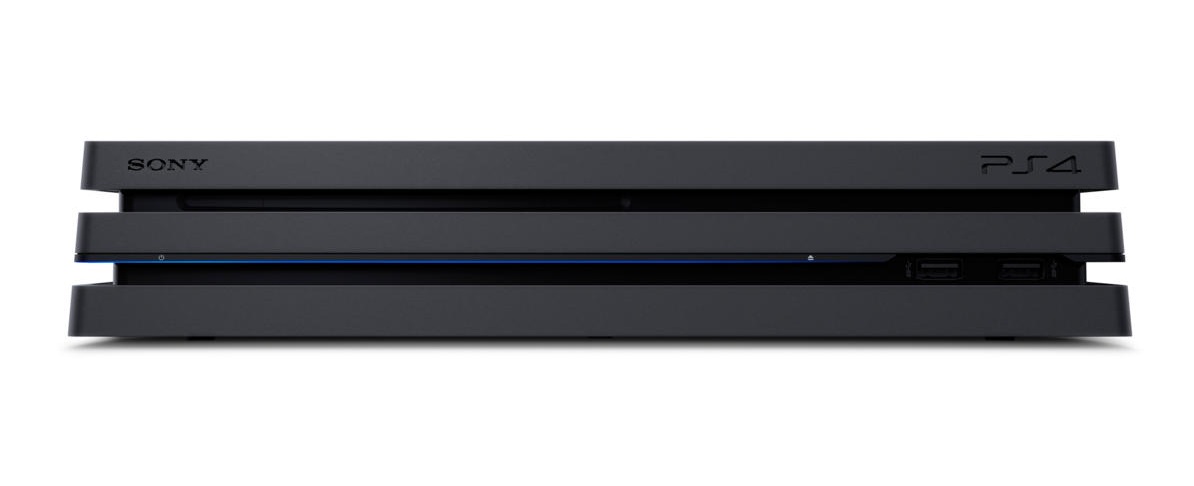
The large advantage of having such low-level access to the metal is that it allows yous to squeeze more performance out of the hardware. This is partially why exclusive PS4 games like Uncharted 4 await then amazing running on relatively outdated PC components. And then, all things considered, we think having a little more than animate being-strength processing power in lieu of access to low-level efficiency is a pretty fair, logical trade.
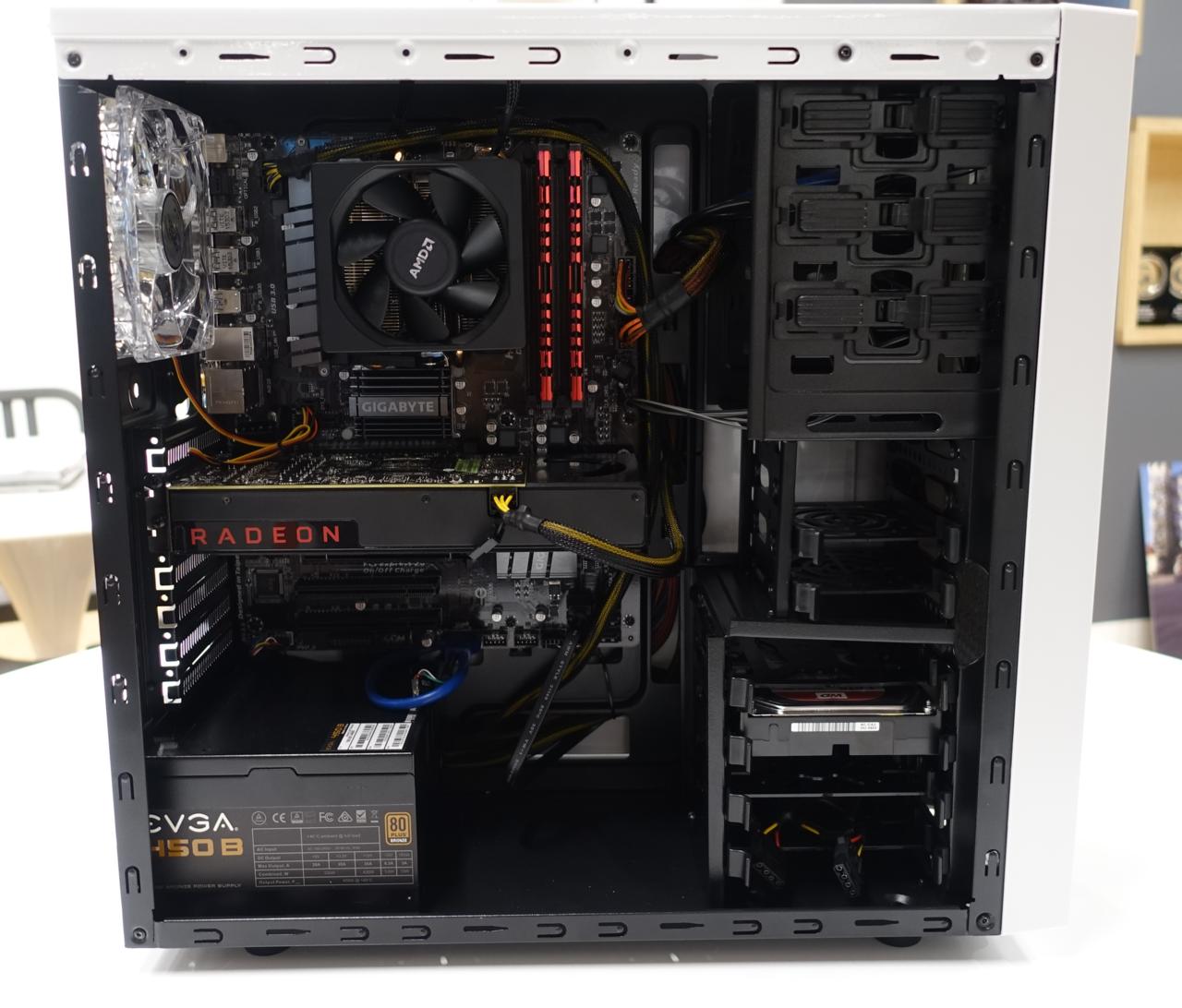
In terms of system RAM, the PS4 Pro shares its 8GB of GDDR5 retention beyond its GPU and CPU. The Thou before DDR here stands for graphics, and while consoles can use this type of memory since they are generally focused on gaming, because traditional PCs are inherently designed to be more multipurpose machines, they are relegated to the more traditional DDR RAM. Having said that, we went with 8GB of DDR3 to try to parallel the Pro's 8GB GDDR5 resource allotment. Yes, this ways nosotros weren't able to create an apples-to-apples setup here, because the PS4's CPU and GPU share a dissimilar type of retention, but we think a healthy 8GB of system retention is balanced past the fact that the PS4 Pro doesn't accept to comport the actress performance burden of running a total-fledged operating organisation like Windows ten in the groundwork. In addition, more RAM isn't likely to make a figurer run faster for gaming applications, but too piddling can create performance bottlenecks. Since this is something we wanted to avoid, we again erred on the side of a little more as opposed to less.
For storage, the PS4 Pro is using a one-terabyte hard bulldoze. Considering Sony'south upcoming system uses a five,400rpm HDD (as opposed to a faster-only-costlier 7,200rpm i), nosotros're going to presume the Pro uses a 5,400rpm 1TB hard drive as well--and we've replicated information technology in our build as such. Storage type isn't likely to affect gaming functioning that much, if at all, just we wanted to simulate the PS4 Pro's surround as accurately every bit possible.
Sony says the overall system power draw for the PS4 Pro is rated at 310 watts, and according to power supply reckoner OuterVision, our homebrew PS4 Pro's overall arrangement power draw is rated at 319w. This is shockingly close. The fact that the 2 systems' power envelopes came within 3 pct of each was a pleasant surprise, especially given what we're trying to do. The two setups are literally well-nigh equal in power.
Like any adept PC builder, however, we did opt for a slightly beefier power supply unit rated at 450w just to protect our components in case of a random power spike.
Comparable Specs
| Specs | Sony PlayStation 4 Pro | Homebrew PlayStation 4 Pro |
|---|---|---|
| CPU | AMD x86-64 AMD 8-core | AMD x86-64 AMD 8-core (FX-8350) |
| GPU | AMD Radeon Polaris GPU | AMD Radeon Polaris GPU (RX 480) |
| RAM | 8GB GDDR5 (Shared memory) | 8GB DDR3 1600MHz |
| Hard Bulldoze | 1TB | 1TB |
| Ability Draw | 310W | 319W |
Our rig's components, excluding the cost of Windows x, costs us $630.91.
Performance Tests
At present that nosotros've got our build PS4 Pro established, allow's walk you through how it performs. At last calendar week'southward PlayStation press briefing, Sony made some performance claims regarding several games. Using those titles besides bachelor on the PC, we're going to try our best to test Sony'south assertions with our build. It's worth reiterating that this won't exist an exact apples-to-apples comparing. Over again, one of the biggest factors is that we're forced to use DirectX, whereas the PlayStation 4 Pro will utilize its own proprietary API. Nosotros as well can't control how well the PC ports are optimized. Taking into account these caveats, we call back our rig is the most representative build comparable to the upcoming console at the moment.
Shadow of Mordor Test
The first performance benchmark nosotros'll examination is with Middle-globe: Shadow of Mordor. While Sony didn't make whatsoever assertions that it volition run at 4K, the visitor did say the Pro will support the game running with supersampling anti-aliasing. SSAA renders a game at a higher-than-1080p resolution and and then will downsample (shrink) the image to fit a 1080p display. This sharpens the image--the aesthetic is perhaps most closely coordinating to viewing college-than-1080p content on a 1080p monitor. If you've ever watched 4K footage on a regular HD monitor and noticed that it looks a little scrap crisper than native 1080p video, you pretty much get the idea.
Unfortunately, nosotros don't know what resolution the PS4 Pro will be downsampling from with Shadow of Mordor, only nosotros practise know that it won't be a 4K game and that it will also inherently have to downsample from a resolution higher than 1080p. This means that it'south reasonable to expect a functioning hit to fall between 1080p and 2160p. With that in mind, we chose 1440p as a surrogate resolution to draw from, given the express information we accept. This is a resolution that many people refer to as 2K, so it's perhaps a bang-up fit for our parameter here.
Running Shadow of Mordor at its highest preset to assistance us achieve the best graphical fidelity possible, our rig got a 61.2 average frames per second using the game's congenital-in benchmark. This is a cracking score, considering the vast majority of TVs tin only display 60fps, since most of them are tied to a 60Hz refresh rate.
As an experiment, nosotros also ran the criterion at 4K native. Surprisingly, it managed to achieve a playable 33.5 boilerplate frames per second. Nosotros consider anything to a higher place 30fps to exist playable. Still, operation did occasionally dip into the 20s, with our benchmark hitting a low of 26.one. Developer Monolith Productions could be opting for a smoother 60fps feel here, equally opposed to a sharper, choppier i. It'due south worth mentioning that Sony's giving developers room to use the PS4 Pro'south extra processing ability as they see fit.
4K
At Sony's printing briefing, the company explicitly stated that the PS4 Pro will be able to handle 4K gaming. Whether or non that means information technology'll run natively at 2160p or be upscaled from a lower resolution isn't clear. We've reached out to Sony to analyze the claims, but we have yet to receive a response at the fourth dimension this story was published. Yet, we do take plenty data here to test the waters ourselves and grade our ain educated guesses.
Killing Flooring 2
One game that Sony stated will have 4K support is developer Tripwire Interactive's first-person shooter Killing Floor 2. Using the game'south highest graphical preset coupled with frame-counting tool FRAPS, our build achieved a 32.vii average frames per second at 2160p. Since it'southward above 30 average frames per 2d, that's a passing grade and frame charge per unit in our book. The game did dip every bit depression every bit 26 average frames per second, so there's a hazard that Tripwire might tone downward the graphical fidelity a scrap to achieve a smoother, more consistent experience, but for all intents and purposes, we tin buy the thought that the PS4 Pro might run Killing Floor 2 natively at 4K.
The Elder Scrolls Online
Sony likewise revealed that The Elderberry Scrolls Online will receive the 4K handling on the PS4 Pro (You lot tin can watch the 4K trailer announcement hither), but allow's use our rig every bit a benchmark to see whether or not the upcoming panel is likely to run it natively or upscaled.
From our exam, we gathered that the massively multiplayer online role-playing game isn't particularly graphically demanding on hardware. Our build was able to accomplish a 49.1 boilerplate frames per second with the game running on its highest graphical preset at 2160p. Given this very playable frame charge per unit, we can again purchase the notion that the PS4 Pro will be able to run this game natively at 4K.
Ascension of the Tomb Raider
Rise of the Tomb Raider is a gorgeous-looking action-chance game, and it's also i that's pretty taxing on hardware. Running the game on its highest preset on the PC includes enabling SSAA. Here, our build accomplished a super choppy x.4 average FPS. Yikes. To be fair, nosotros're confident that Sony isn't asserting that the Pro will be able to do 2160p with SSAA enabled. We were able to get it to a higher place 30 average frames per second by disabling the characteristic and using the game'southward medium graphical preset, where it achieved a 33.4 average frames per second. And then, yes, we could conceivably see the game running on the PS4 Pro natively at 4K with the settings turned downward a scrap.
Alternatively, developer Crystal Dynamics could become the game running on its highest graphical preset by rendering natively at 1080p, but then using upscaling techniques. When we benchmarked the game at 1920x1080 with SSAAx4 enabled coupled with 100-percent resolution scaling (which effectively mimics 4K), we got a playable 33.ix average FPS.
Deus Ex: Mankind Divided
The concluding 4K game that we can examination is the recently released sci-fi thriller Deus Ex: Mankind Divided. This one's extremely graphically demanding, which is something that became abundantly clear to us when nosotros used the game's congenital-in benchmark to run Flesh Divided at its highest graphical preset. Here, nosotros got a whopping 1.2 boilerplate frames per second.
Aye, you read that correctly. It looked like a slideshow. The game's so enervating that when we ran the game at 2160p at its lowest preset with all the graphical bells and whistles disabled, it nevertheless couldn't muster an above-30 average frames per second with a meager 27.3 offer. Unless the game takes crazy advantage of the PS4 Pro'south low-level API, expecting this one to run at a native 4K is currently a tough sell.
This means that Mankind Divided is likely to run in an upscaled mode. Because nosotros know it'due south probably going to incur a pocket-size performance hitting for the upscaling, nosotros're once again going to use our designated 2K resolution every bit a surrogate to run into what kind of performance and fidelity you might expect out of the Pro. At 1440p, we were able to become 31.3 average frames per second by running the game at its very high preset with anti-aliasing disabled. Anti-aliasing is a graphically demanding technique used to smoothen out the "jaggies"--aka the unwanted graphical stair-stepping consequence you frequently encounter in games.
Conclusion

Coming out of the PlayStation press conference, there was a lot of skepticism on whether or not the PS4 Pro would actually be able to handle 4K gaming. If our build is any indication of what the PS4 Pro might run like, then the answer'due south yes, it can run games at 4K...kind of. While it will be able to handle lesser-taxing games at 2160p natively, we suspect the more graphically enervating titles volition be upscaled.
While we tried to recreate the PS4 Pro surround as faithfully as we could, nosotros want to reiterate that our experiment isn't probable to be precisely indicative of the PS4 Pro's true performance. Nosotros simply can't account for a lot of factors, such as having access to the console's low-level API that would give it a performance advantage relative to its ability, but given what we know coupled with the bachelor off-the-shelf components, we think our build offers the all-time representation of ballpark functioning you'll find today. As it's looking so far, the PS4 Pro is nearly as powerful every bit a competent upkeep gaming PC. Nosotros'll know how correct (or wrong) we were when the console comes out in Nov.
Got a news tip or want to contact us directly? Email news@gamespot.com

What Is The Ps4 Gpu Equivalent To,
Source: https://www.gamespot.com/articles/we-built-a-pc-using-ps4-pro-specs-how-does-it-perf/1100-6443491/
Posted by: ballardwomed1977.blogspot.com
0 Response to "What Is The Ps4 Gpu Equivalent To"
Post a Comment